


Chinatown,
Untranslated


An introduction to the place, its atmosphere, and the mindset needed to photograph it.
This video sets the tone before any image is made.
Entering the Territory • 7 min
Those Who Looked First
Learning with those who mastered it before us.

1971

1983

Tokyo
1971

Pre Production
First things first
Weather
-
Overcast days: ideal for reading layers, signage, and texture
-
Cold mornings: stronger sense of labor and routine.
-
Light rain: reflections, separation of planes, visual density.
Location
Streets
-
Mott Street (nice view to Empire Estate)
-
Grand Street
-
Canal Street (edges and pressure points)
-
East Broadway
-
Side streets between Elizabeth, Bowery, and Allen
Subway
-
Canal St. J / Z
-
Grand St D/ B
-
East Broadway F
-
Bowery J / Z
-
Spring St. 6

Best time to shoot
-
Early morning (7am–9am): Nice light comes trough Grand St. Local people. Deliveries, preparation, rhythm before crowd.
-
Midday (11am–2pm): maximum density, compression, friction.
-
Late afternoon: light cutting through streets, visual breathing.
Suggested Equipment
Kit A — Observational
-
35mm
-
Moderate aperture (f/5.6–f/8)
-
Comfortable distance, no confrontation
Kit B — Compression & detail
-
50mm
-
Selective framing inside visual chaos
-
Signage, hands, objects, gestures
Kit C — Inside / reflections
-
Fast lens
-
Glass, vitrines, interior-exterior overla
-
Accept imperfect light as language

Production
Shoot first, edit maybe
What to look for

Sidewalks used as storage, display, and logistics — commerce overflowing into public space. Canon R5 - lens: Voigtlander 35mm 2.0 f 5.6 • 1/45 • ISO 1250

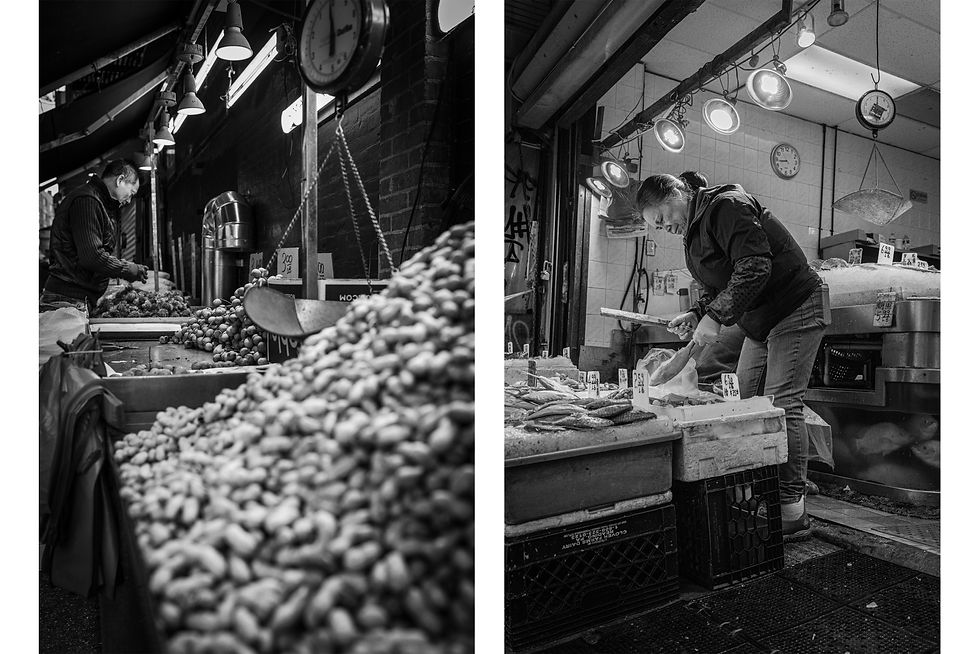
Cutting, weighing, packing, counting. Faces optional. Gesture is enough.

A single image that breaks the internal logic: souvenirs, slogans, visual noise from outside.
Sidewalks used as storage, display, and logistics — commerce overflowing into public space. Canon R5 - lens: Voigtlander 35mm 2.0 f 5.6 • 1/45 • ISO 1250
SHOOTING LIST
01. The sidewalk as warehouse
02. Hands at work
03. Language as texture
04. Glass worlds, reflections
05. Generational overlap
06. Compression portraits
07. Delivery choreography
08. The ritual of choosing
09. Edges and seams
10. Tourist rupture

Lets get to the image . 8 min
We’ll break down a selection of photographs from this assignment — how they were made, the decisions behind each frame, and why certain choices mattered more than others.

Post Production
That really matters
Editing
.png)
Editing as direction • 6 min
This video explores how different editing choices can shift meaning, narrative, and authorship.
Color Grading
.png)
From Capture to Final • 12 min
A practical walkthrough of turning raw files into finished images.
COLOR PRESETS



Publishing
Show time. If the work stays on a hard drive, it’s not finished.
Photobook
A photobook forces decisions. What comes first, what follows, what breathes, what repeats, what disappears. Images stop competing for attention and start working together. Meaning is built in the gaps, in the pacing, in the order.
Chinatown demanded this format. Its logic is cumulative, not spectacular. Repetition matters. Small gestures gain weight when placed next to each other. A book allows the work to unfold slowly, without explanation, without translation.


PHOTOBOOK TEMPLATE
.jpeg)


After Hours
Enjoy the ride
Bars and Restaurants

Opened in 1920 it's the oldest restaurant in Chinatown NYC

In the 100's NYC restaurants list of NYT. No reservations, no credit cards either.

Specialty flavors like green tea, black sesame, lychee, and a highly nutty zen butter
Opened in 1920 it's the oldest restaurant in Chinatown NYC